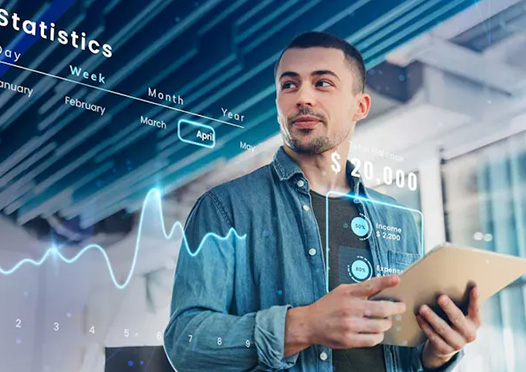
Picture the world of data as an enormous ocean where waves never stop forming. Traditional analysts once sailed this ocean with sturdy ships and sharp compasses. Today, AI driven analytics tools have arrived like powerful underwater currents that accelerate the journey, shift the tides, and reshape how the ocean behaves altogether. They do not replace the sailor. Instead, they teach the ocean to guide the ship forward. This evolving landscape demands a new blend of intuition, critical thinking, and technological fluency from every professional who works with data. As organisations integrate automation and intelligent systems, the role of analysts transforms from operational paddlers to strategic navigators.
Within this shifting environment, many learners explore structured paths such as a data analyst course in Chennai to strengthen their fundamentals while adapting to new AI enabled workflows.
AI Tools as the New Compass of Modern Decision Making
It was once enough for analysts to manually gather datasets, clean anomalies, and build descriptive dashboards. Today, AI tools act like advanced compasses that do more than point north. They anticipate storms, map hidden currents, and highlight probabilities that would have remained invisible to the human eye. Machine learning models automatically detect outliers. Natural language interfaces allow anyone to question the data in conversational form. Predictive engines scan historical trails and propose what is likely to unfold next.
Yet even the smartest compass must be interpreted. This is where the analyst’s expertise continues to matter. The analyst becomes responsible for choosing which tools to trust, validating outputs, and ensuring that the organisation does not mistake model outputs for absolute truth. Storytelling skills, contextual understanding, and risk assessment rise in importance as AI systems increase in complexity.
From Manual Rowing to Automated Sails
AI has reduced the need for repetitive manual tasks, allowing analysts to shift from rowing to adjusting sails that propel high speed decision making. Tasks such as feature extraction, missing value treatments, and basic reporting can now be automated with a few clicks. This automation frees time and mental energy for deeper investigative work and strategic alignment.
Consider how AI models can automatically generate insights after scanning millions of data points. Analysts no longer have to chase every small detail. Instead, they refine the insights, question assumptions, and translate the findings into actions that create value. The role becomes less about mechanical execution and more about orchestrating an ecosystem of tools. The analyst must know when to slow down the automated sails, when to accelerate them, and when to rely on manual judgment.
The Analyst as the Interpreter of Machine Intelligence
AI can calculate faster, but it cannot fully understand business nuance, ethical boundaries, or stakeholder expectations. The modern analyst stands at the intersection of machine intelligence and human reasoning. This role resembles that of an interpreter who understands both languages. Data speaks in patterns. AI speaks through probabilities. Business leaders speak through goals and constraints. The analyst blends these voices to form a coherent narrative that influences real outcomes.
Interpretation becomes critical when AI models deliver conflicting results or reveal unexpected correlations. Organisations depend on analysts to clarify which insights hold strategic potential and which ones are misleading. They must also ensure that AI systems operate with fairness and transparency. As regulations around data grow stricter, interpreters of machine intelligence will become highly valued across industries.
Reimagining Skills for the AI Enabled Future
The rise of AI powered analytics tools shifts the skill expectations for analysts. Logical thinking, mathematical grounding, and data cleaning remain important, but new competencies emerge. Analysts must understand how models are built, how bias creeps into training pipelines, and how interpretability frameworks work. They must master prompt based querying, automated model selection tools, and AI augmented visualisation systems.
Soft skills also gain prominence. Communication, ethical reasoning, stakeholder management, and domain fluency shape how effectively AI insights are applied. Analysts who can translate technical outputs into actionable strategies will stand out in competitive environments. This has increased the demand for structured learning programs that blend foundational analytics with AI capable frameworks. Many professionals begin this journey through advanced upskilling paths such as a data analyst course in Chennai to stay relevant in the rapidly changing market.
Collaboration Between Humans and Intelligent Systems
The future is neither fully automated nor solely human led. It is collaborative. AI tools excel at precision, repetition, and speed. Humans excel at empathy, judgment, and creativity. Together they form a powerful alliance that drives innovation. Analysts who embrace this partnership will shape the next generation of business intelligence. They will oversee AI models, validate assumptions, and ensure that automated decisions align with ethical standards.
This collaboration also means analysts influence how tools are adopted across the organisation. They become advisors who guide leadership on data readiness, identify opportunities for intelligent automation, and design workflows where machine speed enhances human insight. Far from being replaced, analysts amplify their capabilities when working alongside intelligent systems.
Conclusion
The rise of AI driven analytics tools signals a profound transformation in the world of data. These tools act as the evolving ocean currents that reshape how analysts navigate information. They accelerate insight discovery, automate repetitive work, and expand the possibilities of predictive reasoning. However, the human analyst remains central to the narrative. Their role shifts toward interpretation, strategic decision making, and ethical stewardship.
Professionals who embrace these changes will discover new opportunities to lead data driven conversations across industries. Those who combine foundational analytics knowledge with AI enhanced skills will thrive in a future where human intelligence and machine intelligence work together. The ocean of data continues to grow, and the analysts who learn to navigate it using both intuition and AI powered tools will define the next era of business transformation.